
Exploring Fukuoka with the Goodwill Ambassadors!A Tour Through Historic and Cultural Sites
Join Fukuoka’s Goodwill Ambassadors and explore the city’s rich history and culture. Discover not only the classic spots, but also deeper stories, and overlooked views you might have missed. Spend your next day off uncovering Fukuoka’s historical treasures for a truly special experience!

In this first episode, let’s explore the Shikanoshima Island area with Narumi Kunisaki!
A History and Culture Tour Around Shikanoshima Island
Shikanoshima, an island located north of Hakata Bay, is accessible in about an hour from the city center. Regarded since ancient times as a hub for exchange with the Asian continent, the island is known as the site where the Kinin Golden Block Seal, a National Treasure, was discovered. Immerse yourself in the romance of history by visiting the many historical sites left behind on the island and encountering poems about Shikanoshima Island preserved in the Man’yōshū anthology.
The island also offers activities such as cycling and seaside swimming, as well as gourmet cuisine featuring fresh seafood. Here, we introduce a wide variety of spots where you can fully enjoy nature, history, and delicious local food!
First, let’s board a municipal ferry from Bayside Place Hakata and head for Shikanoshima! Boats operate 15 round trips per day, making it easy to visit from Fukuoka. Feel the refreshing sea breeze while enjoying the approximately 30-minute cruise to the island. Before you know it, Shikanoshima Island comes into view.

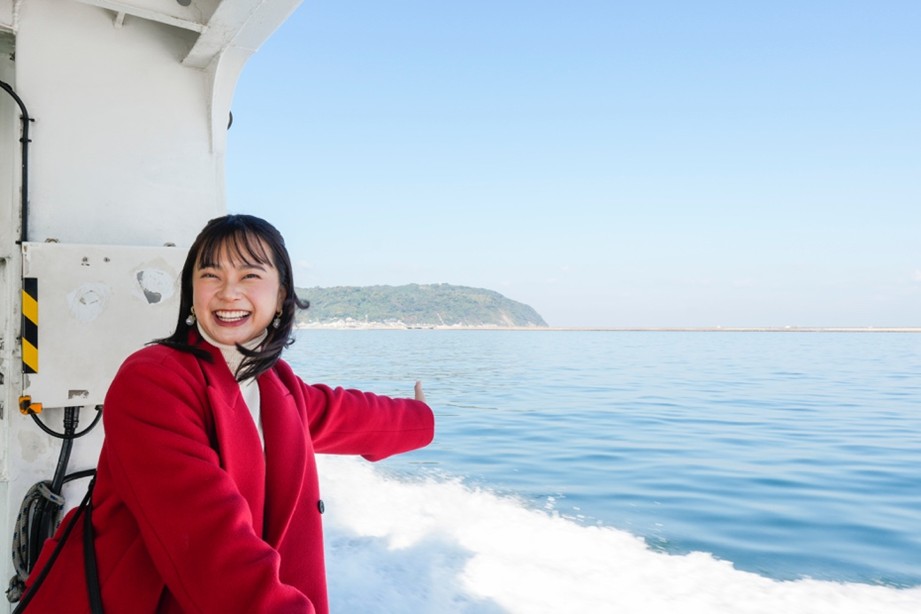
Fukuoka City Ferry Hakata Ferry Passenger Terminal (within Bayside Place Hakata)
- ■Address:
-
13-6 Chikkohonmachi, Hakata Ward, Fukuoka City, Fukuoka Prefecture
- ■Access:
-
1-minute walk from the Hakata Futo stop of Nishitetsu Bus
About 20 minutes on foot from Nakasu-Kawabata Station (Subway Airport Line)
- ■Ferry information:
- https://www.city.fukuoka.lg.jp/kowan/kyakusen/hakata-port/hyo.html
Finally Arriving at Shikanoshima Island!
Stepping off the ferry, you arrive at the Shikanoshima Ferry Passenger Terminal. Immediately, the Kinin Golden Block Seal sculpture, a symbol of Shikanoshima Island, welcomes you. Don’t forget to snap a commemorative photo next to the large seal! Did you know Shikanoshima isn’t just accessible by ferry: you can also get there by train, bus, or car. It’s a tourist destination that offers a little bit of a resort vibe, making it perfect for a relaxing getaway.
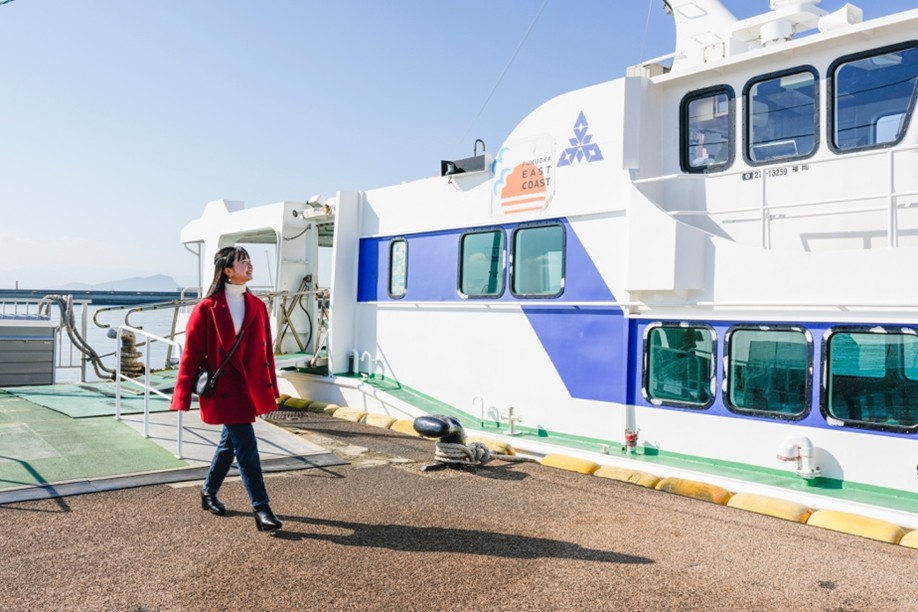
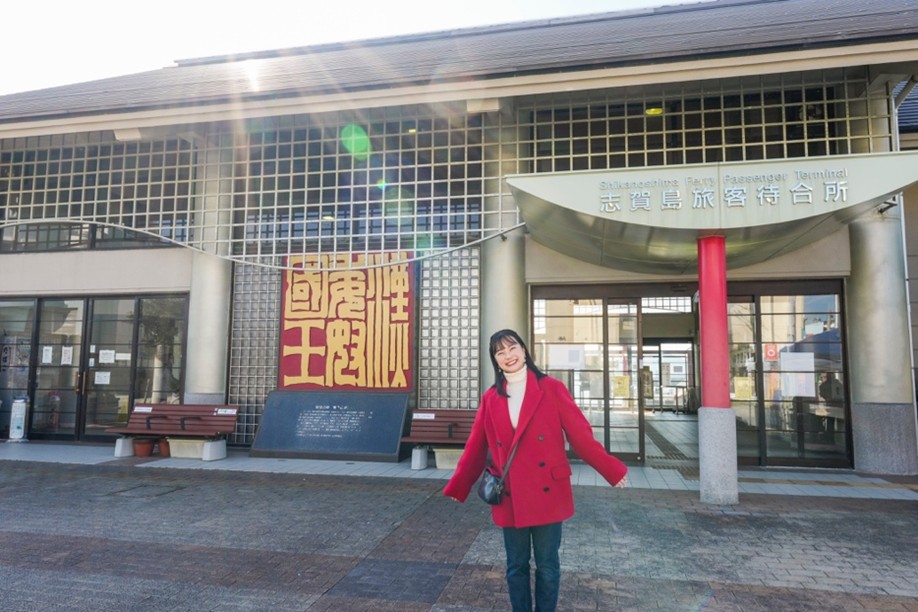
Fukuoka City Ferry Shikanoshima Ferry Passenger Terminal
- ■Address:
-
411-44 Shikanoshima, Fukuoka City, Fukuoka Prefecture
- ■Ferry information:
- https://www.city.fukuoka.lg.jp/kowan/kyakusen/hakata-port/hyo.html
The Only Road Across the Sea[Michikiri]
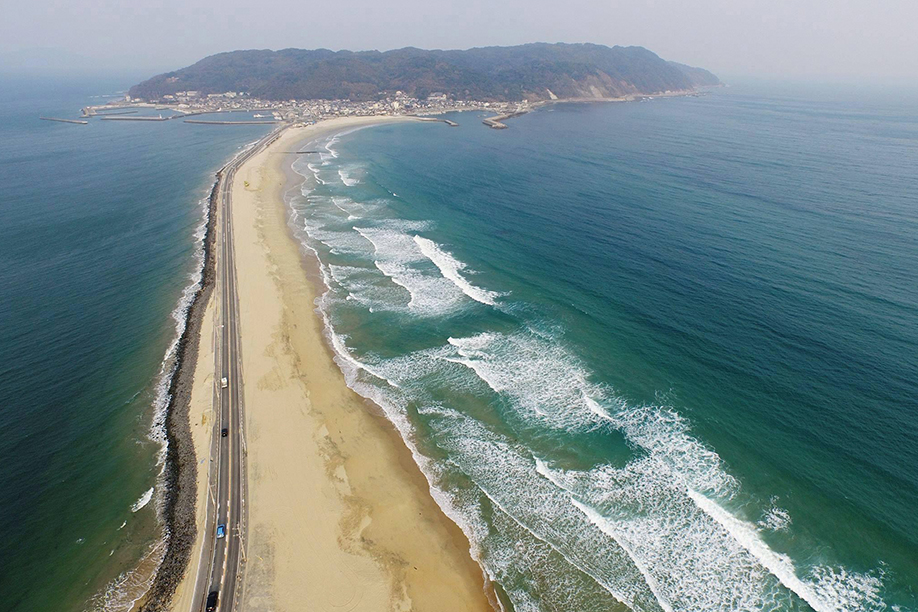
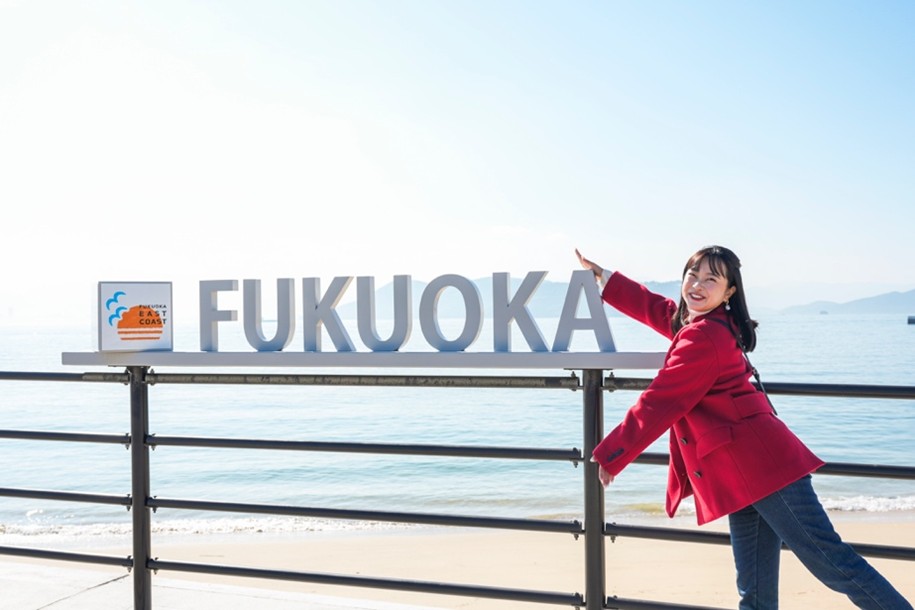
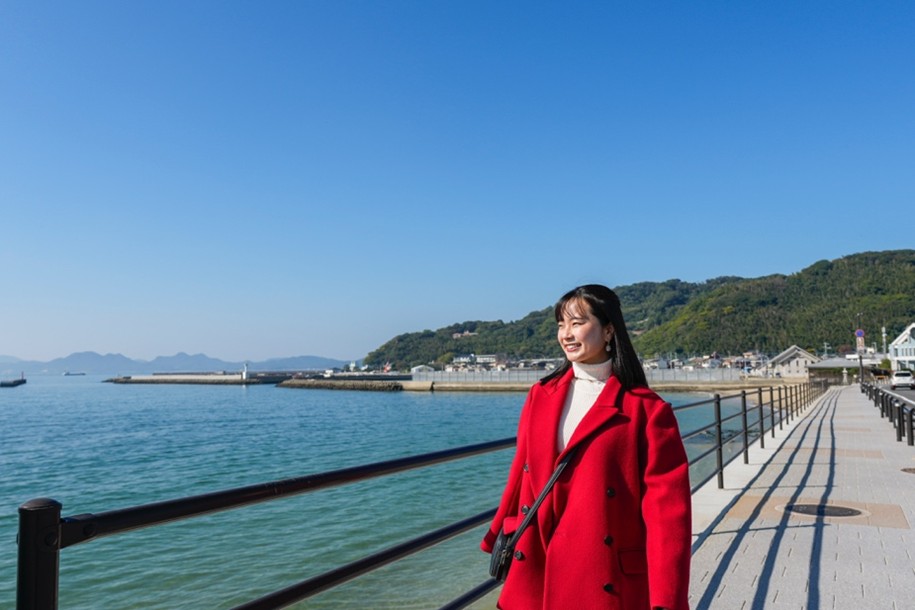
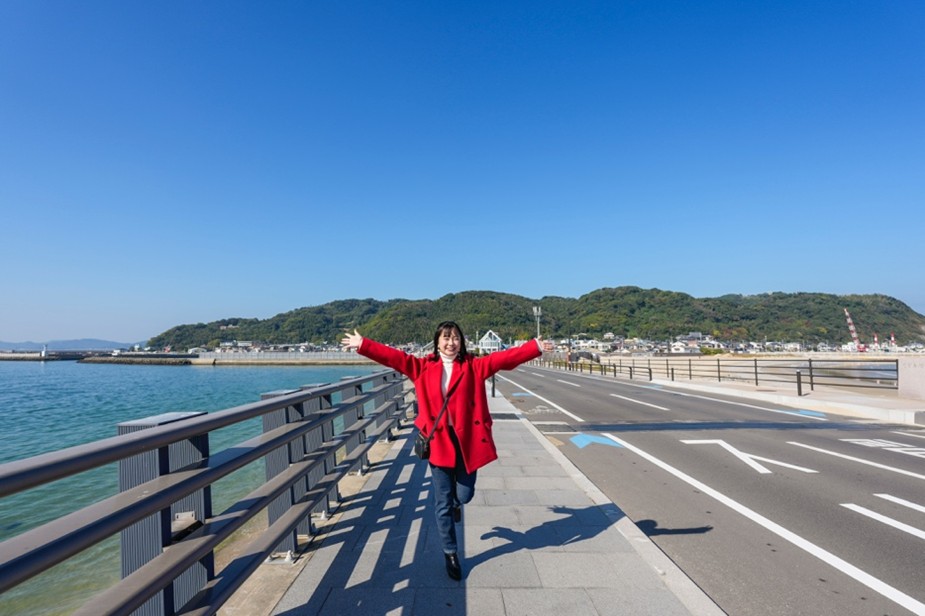
The road leading to Shikanoshima, flanked by the sea on both sides, was once known as “Michikiri, (literally meaning “road cut off”)” as it disappeared at high tide.Originally lined with 53 utility poles, the road became pole-free in 2025. Rest areas and photo spots have also been added, making it a must-visit spot on Shikanoshima!
With the road between them, you can see the wild Genkai Sea to the north and the calm Hakata Bay to the south, offering completely different views on either side.
With its straight path and pleasant scenery, the Michikiri road is perfect for cycling or running.
Take on the Challenge of Cycling Around the Island![Shikashima Cycle]
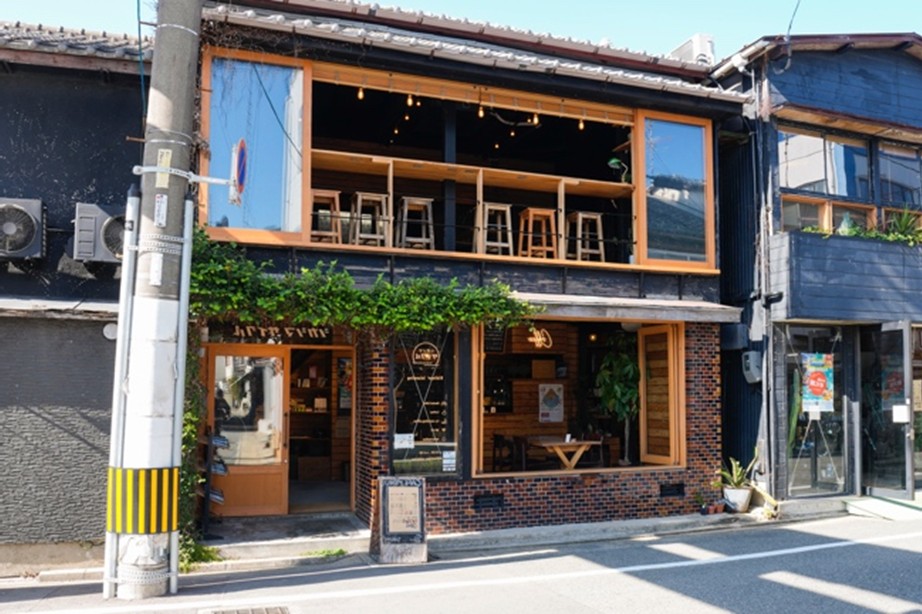
Right after arriving, you’ll find Shikashima Cycle, a rental bike shop and café near the torii gate of Shikaumi Shrine. Choose your favorite bike from a variety of options, including hybrid bikes, mountain bikes, and kids’ bikes. It’s also a great place to take a break with drinks and sweets during your island tour.

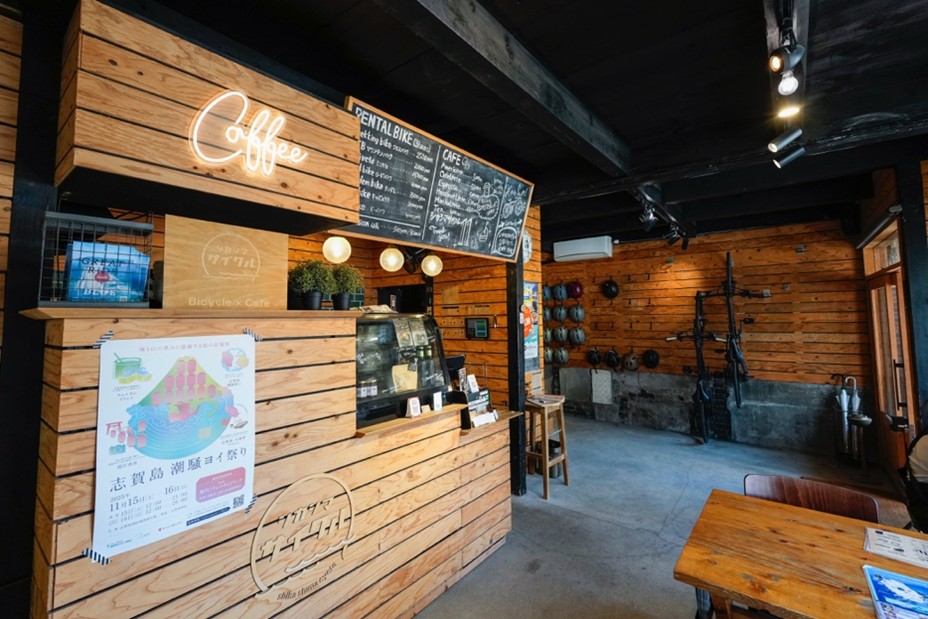
Shikashima Cycle
- ■Address:
-
417-1 Shikanoshima, Higashi Ward, Fukuoka City
- ■Access:
-
30-second walk from Shikanoshima Ferry Terminal
Near the Shikanoshima stop of Nishitetsu Bus
- ■Opening Hours:
- 9:00 AM – 6:00 PM
- ■Closed:
- Tuesdays
- ■Phone:
- 050-6874-4398
- ■Parking:
- 5 spaces
Guardian Sea Deities Venerated Since the Age of the Man’yōshū[Shikaumi Shrine]
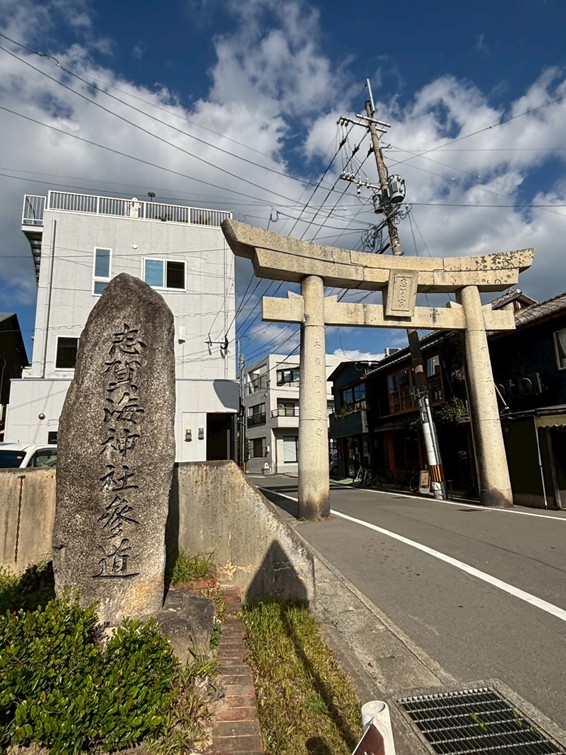
Perched atop a small hill, Shikaumi Shrine offers panoramic views of the Genkai Sea. Long revered as the “Head Shrine of the Sea Gods” and the “City of Dragons,” it has served as the principal tutelary shrine of Hakata Bay, a crucial maritime hub. Its enshrined Three Watatsumi gods protect the depths, middle, and surface of the sea, overseeing maritime safety, blessing the tides and marine life, and purifying visitors from impurities and calamities.
 1
1
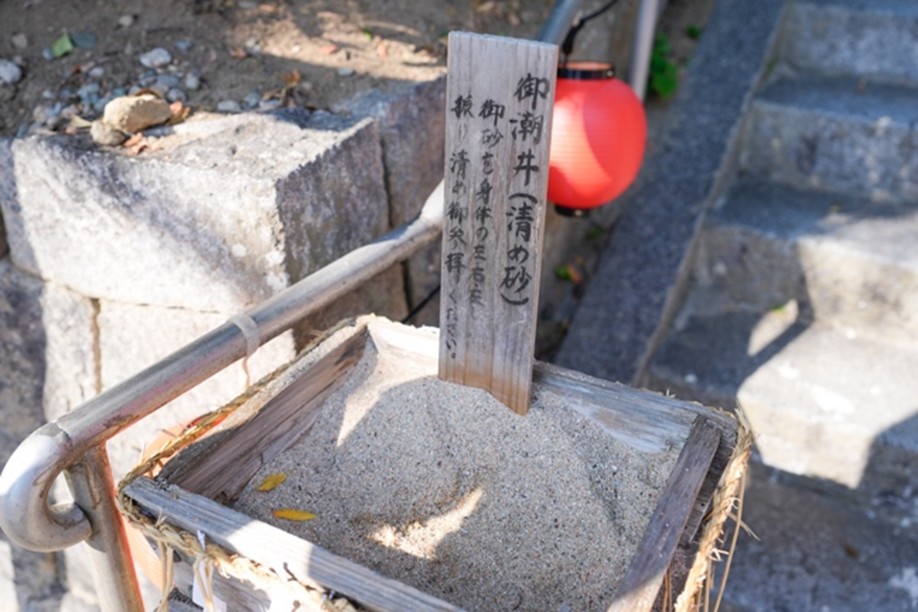
The enshrined deity is also revered as the god of purification. Before worship, visitors cleanse their body and mind using Oshioi, a purifying sand sprinkled left, right, and then left of the body.
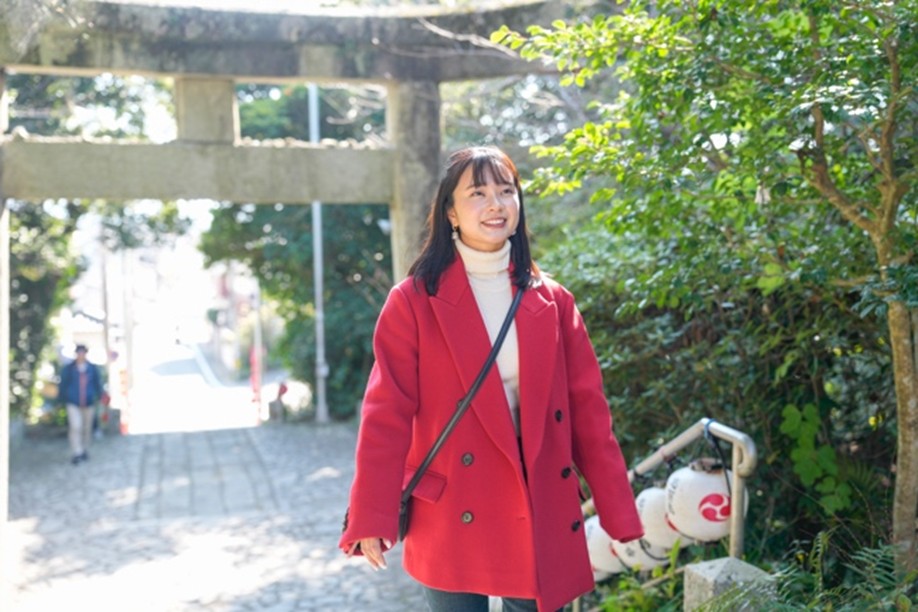
The shrine’s Deer Antler Repository houses over 10,000 deer antlers. According to legend, Empress Jingu offered deer antlers to report her victory on the Korean Peninsula, and many military commanders later did the same to pray for victory in battle. Numerous sacred treasures are preserved here, including a Korean-made gold-gilded bell (nationally designated Important Cultural Property) and a thin bronze sword mold (prefecturally designated Tangible Cultural Property). Festivals such as the Archery Festival, the Mountain Praise Festival, and the Shinto Festival Procession are designated Intangible Folk Cultural Assets by the prefecture, preserving ancient traditions.
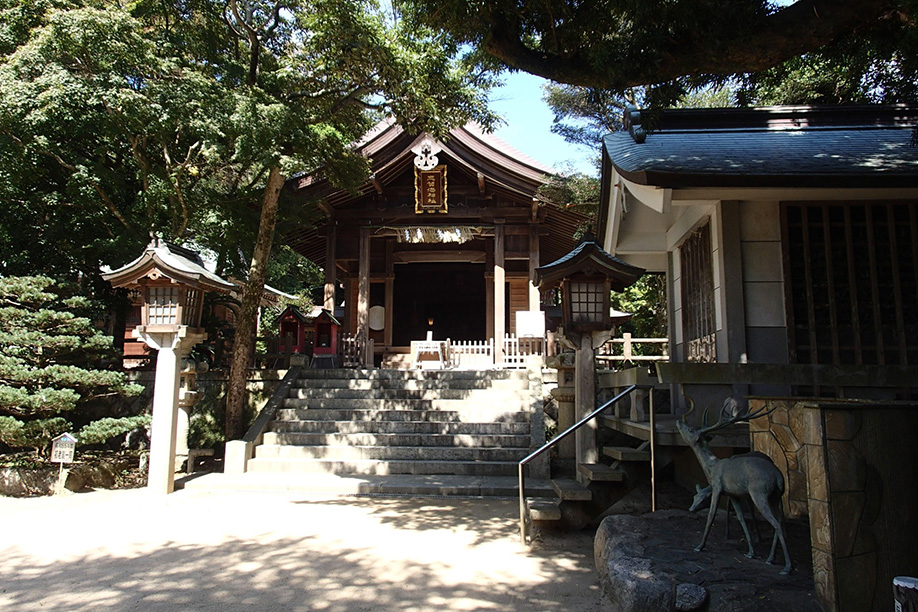
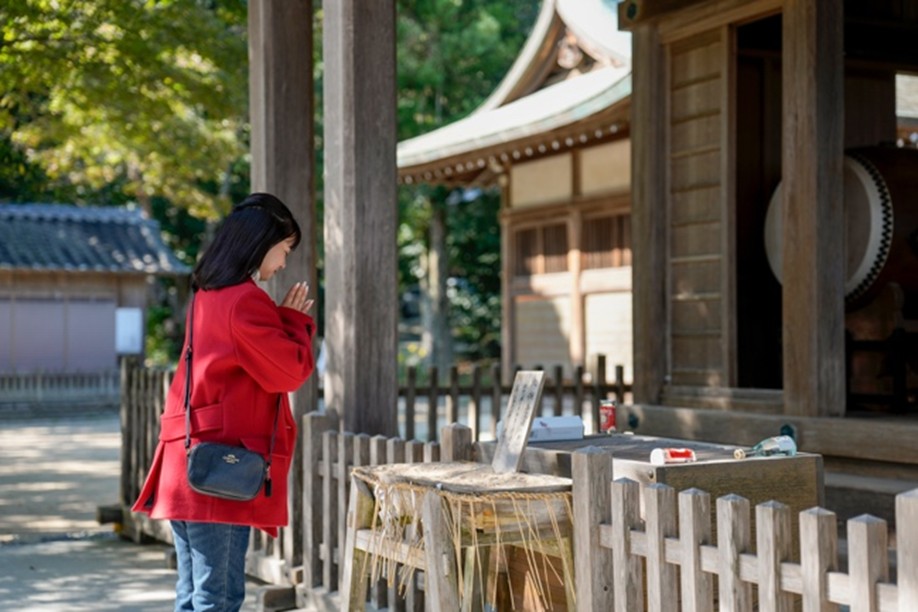
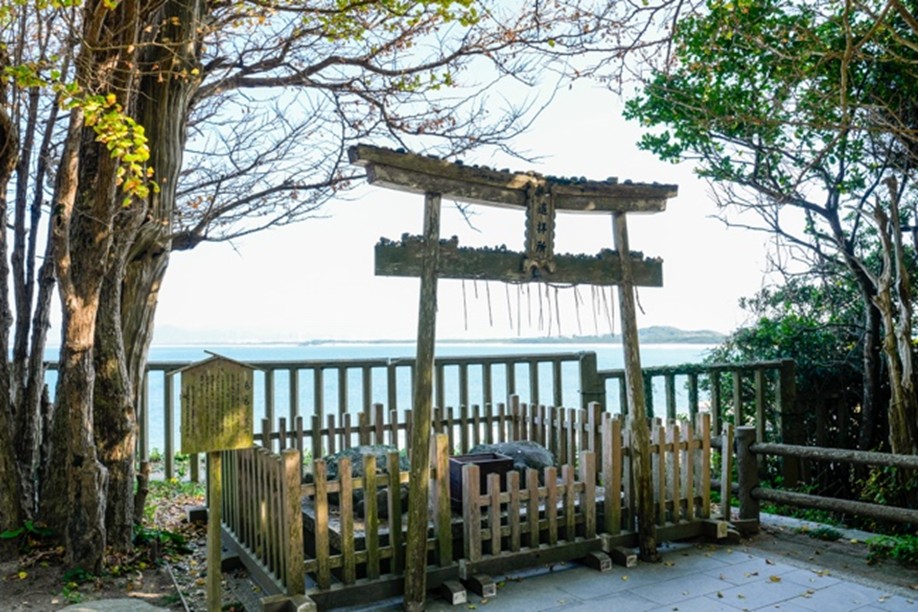
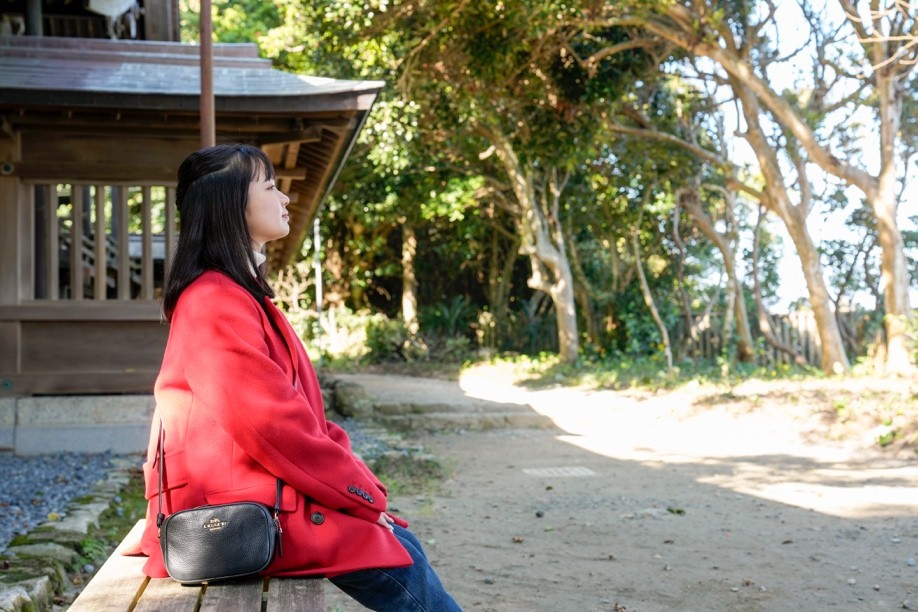
After our visit, we took a moment to unwind in the quiet shrine grounds, with a gentle breeze in the air. To the right of the main hall is a remote worship site housing two turtle stones, male and female, linked to the legend of Empress Jingu. The story goes that when Empress Jingu journeyed to the Korean Peninsula, she prayed for a safe voyage through the god of the sea, Azumi no Isoramaru. In response, a male and female pair of golden turtles emerged from the sea carrying deities who protected and guided her voyage. These turtles later turned to stone and washed ashore on Shikanoshima Island, where they were offered in gratitude to the gods.
Shikaumi Shrine
- ■Address:
-
877 Shikanoshima, Higashi Ward, Fukuoka City
- ■Access:
- 10-minute walk from Shikanoshima Ferry Terminal or Shikanoshima bus stop
- ■Visiting Hours:
- 6:00 AM – 5:30 PM
- ■Contact:
- 092-603-6501
- ■Parking:
- Large parking lot available
- ■Official Website:
- http://www.shikaumi-jinja.jp/
The National Treasure Kinin Golden Block Seal Was Found Here!?[Kinin Park]
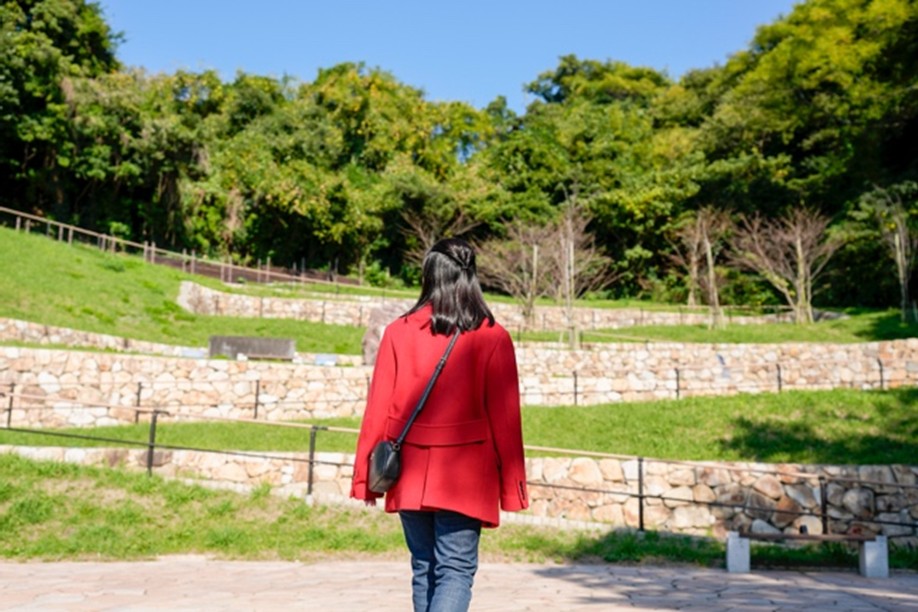
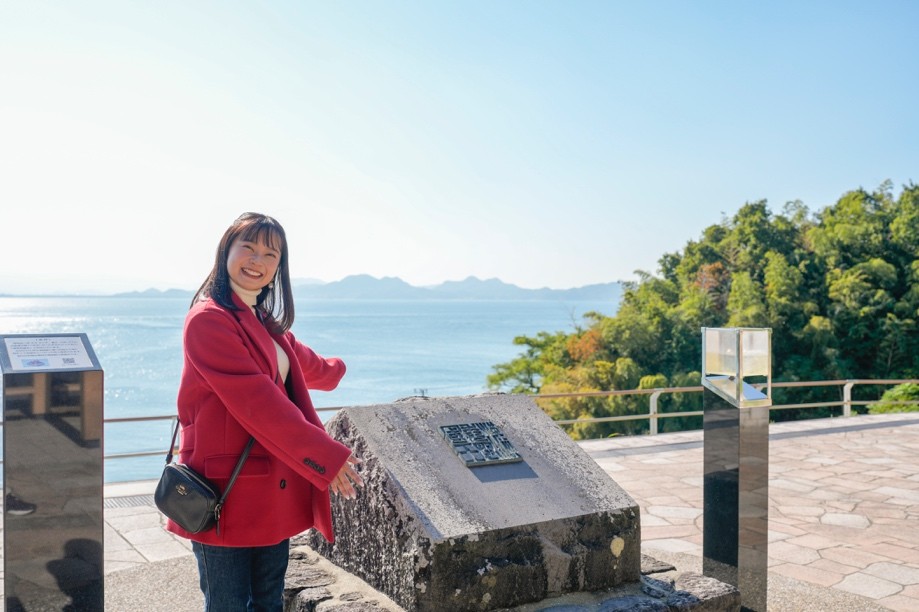
This park marks the site where, in 1784, a peasant named Jinbe is said to have discovered a gold seal beneath a large rock on Shikanoshima while repairing an irrigation ditch in a rice field. The seal is inscribed with the characters “漢委奴國王,” meaning “(seal of) the King of the Na state of the Wa (ancient Japan) of the Han dynasty,” and is believed to have been bestowed in the year 57 by Emperor Guangwu of Han China upon envoys from Wa. Today, the seal is designated as a National Treasure and is exhibited at the Fukuoka City Museum.
Since the seal’s discovery, studies through excavations and of historical documents have been conducted. Various theories have been proposed to explain why the seal was found on Shikanoshima—far from the central area of the Na state inscribed on the seal (roughly from present-day south of Hakata Station to Okamoto, Kasuga City)—yet many mysteries remain unsolved.
At the entrance to the park stands a commemorative monument inscribed with “漢委奴國王金印発光之処 (The Place Where the King of Na Gold Seal Was Discovered).” Within the park are features such as ancient maps as well as a monument bearing a poem by Guo Moruo (known as Kaku Matsujaku in Japan), a renowned Chinese historian and literary figure with close ties to Fukuoka. From the observation deck, visitors can enjoy the beautiful coastal scenery and sweeping views of Nokonoshima Island directly ahead.
Kinin Park
- ■Address:
-
1865 Furuto, Shikanoshima, Higashi Ward, Fukuoka City, Fukuoka Prefecture
- ■Access:
- 2-minute walk from the Kininzuka bus stop
- ■Parking:
- Available (public restrooms available)
Memorial for Mongol Soldiers Who Died in Battle During the Mongol Invasions[Mongolian Mound]
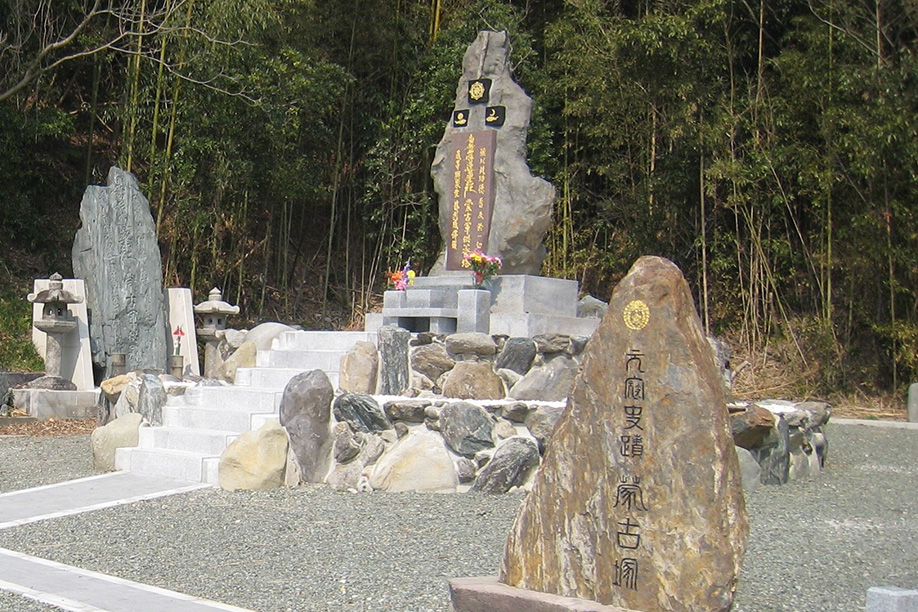
The Mongolian Mound, once also called the “Decapitation Mound,” is considered the ancient battlefield of the Bun’ei and Koan Campaigns (1274 and 1281), known as the two Mongol invasions of Japan. The memorial was erected in 1927 to honor the Mongol soldiers who lost their lives in shipwrecks or battles, and bears inscriptions by Tanaka Giichi and Tōgō Heihachirō. Nearby stands another monument inscribed with the “Eulogy for the Mongol Army Memorial,” written by Chinese warlord Zhang Zuolin (known as Chou Sakurin in Japan). This site is noteworthy not only for its medieval history but also for its significance in understanding modern history.
Originally, these monuments were located on a hillside to the north, but they were severely damaged during the 2005 Fukuoka Prefecture West Sea Earthquake. They have since been relocated to a site further south for preservation. The stone monument currently at the center was rebuilt in 2005, but the original is also preserved on the grounds.
Mongolian Mound
- ■Address:
-
Shikanoshima, Higashi Ward, Fukuoka City, Fukuoka Prefecture
- ■Access:
- About 25 minutes on foot from Shikanoshima Ferry Terminal
- ■Parking:
- Available
The Northernmost Shrine on Shikanoshima[Okitsu-gu, Shikaumi Shrine]
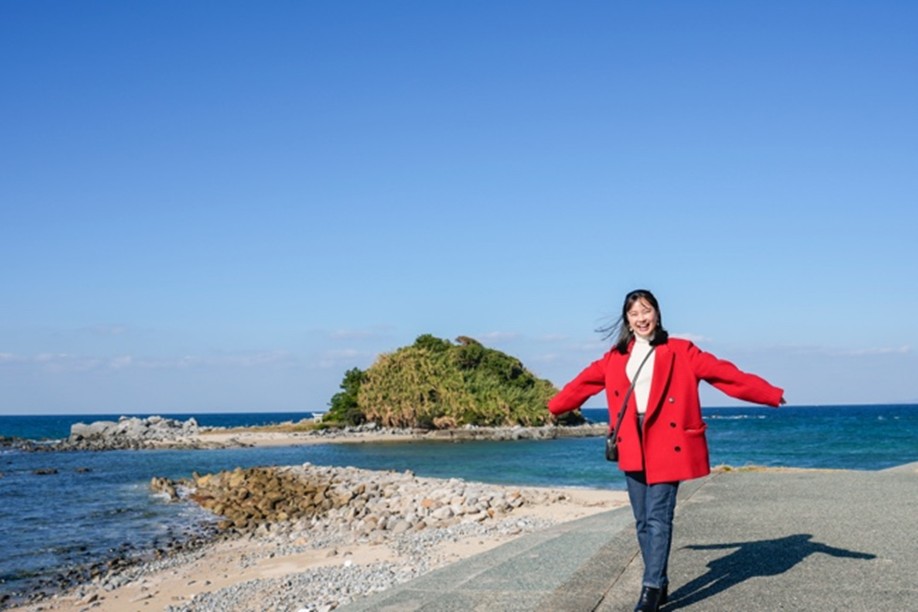
Shikaumi Shrine’s Okitsu-gu stands on a small island floating in the Genkai Sea, at the northern tip of Shikanoshima. In ancient times, three sub-shrines—Uwatsu-gu, Nakatsu-gu, and Okitsu-gu—were located in Katsuma on northern Shikanoshima, each venerating the Three Watatsumi gods: Uwatsu (Surface Sea), Nakatsu (Middle Sea), and Sokotsu (Bottom Sea).
Today, Okitsu-gu remains on the small island, and its rituals are held to this day. Depending on the tides, it can be reached on foot, making it a mystical power spot for visitors.
Connected to this small island, Gebagahama Beach offers a refreshingly open seaside experience with crystal-clear waters, as well as surrounding lawns and pine groves. Opening around early July each year, it bustles with visitors enjoying swimming, barbecues, and fireworks.
Okitsu-gu, Shikaumi Shrine
- ■Address:
-
Katsuma, Higashi Ward, Fukuoka City, Fukuoka Prefecture
- ■Access:
- 10-minute walk from the Kyukamura Shikanoshima stop of Nishitetsu Bus
- ■Parking:
- 10-minute walk from the Kyukamura-mae Parking
A Ancient Tomb Standing in the Forest[Nakatsu-gu Kofun]
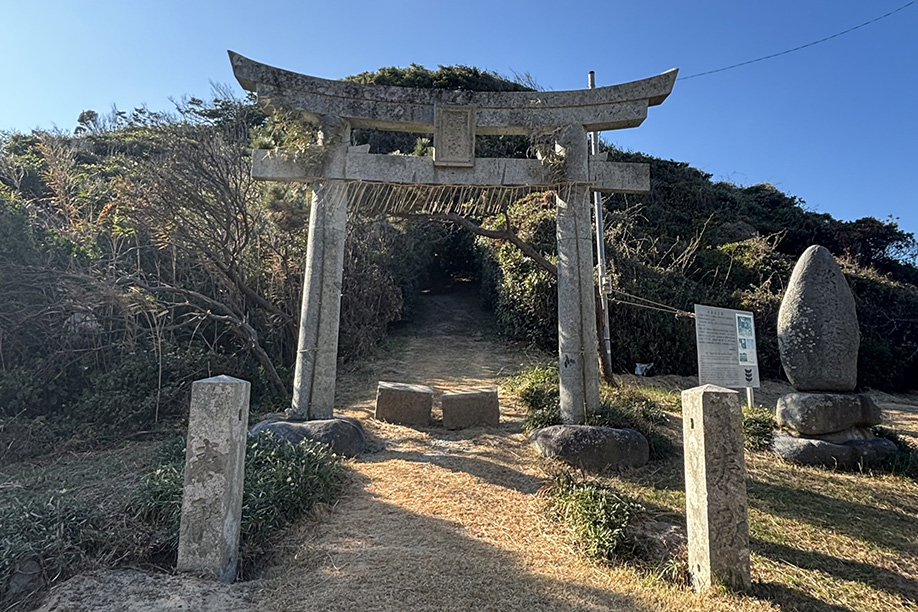
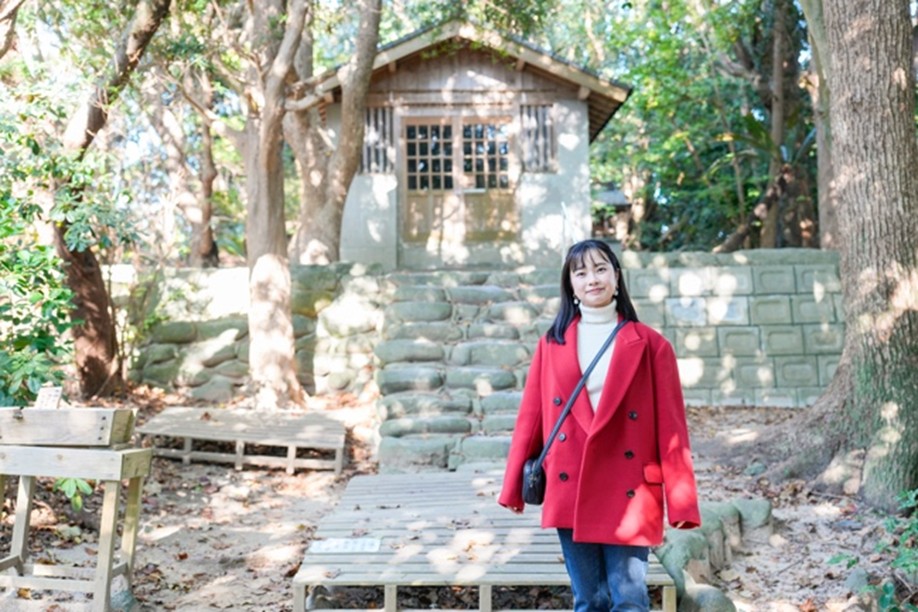
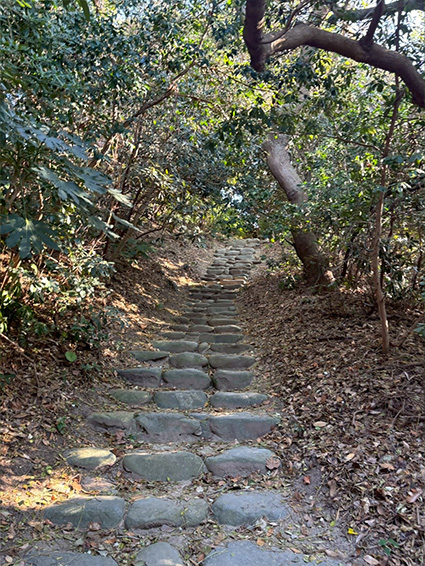
Passing through a fantastical forest tunnel from Gebagahama Beach and climbing stone steps brings you to the Nakatsu-gu Kofun (tomb). Located in the forecourt of Shikaumi Shrine’s Nakatsu-gu, this ancient tomb is believed to have been built in the first half of the 7th century and is thought to be the burial site of the chieftain of a group of sea people based in Katsuma.Nine jikan (ear ornaments) were unearthed from within the stone chamber alongside Sue ware pottery and iron weapons, suggesting multiple individuals were buried there.
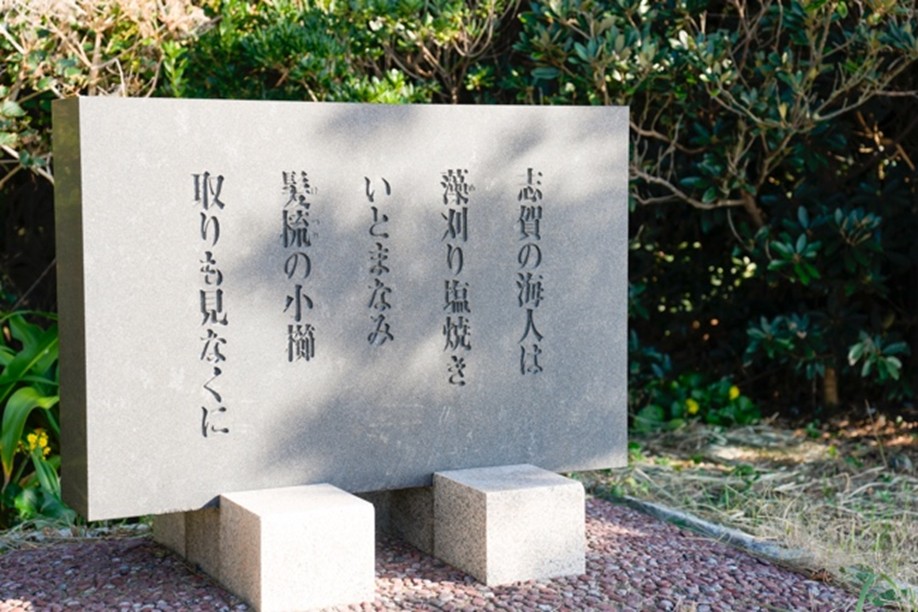
The Man’yōshū anthology contains numerous poems about the people of Shikanoshima, particularly the “sea people” who produced salt by burning seaweed. Poetry monuments dedicated to these verses are found throughout the island.
Nakatsu-gu Kofun
- ■Address:
-
Katsuma, Higashi Ward, Fukuoka City, Fukuoka Prefecture
- ■Access:
- 10-minute walk from the Kyukamura Shikanoshima stop of Nishitetsu Bus
- ■Parking:
- 10-minute walk from the Kyukamura-mae Parking
The Island’s Premier Scenic Spot[Shiomi Park Observatory]
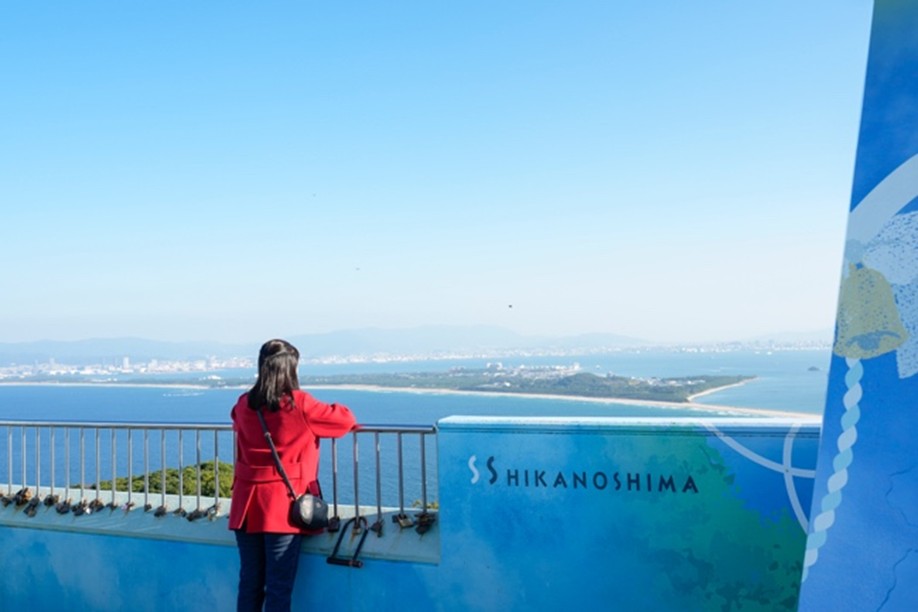
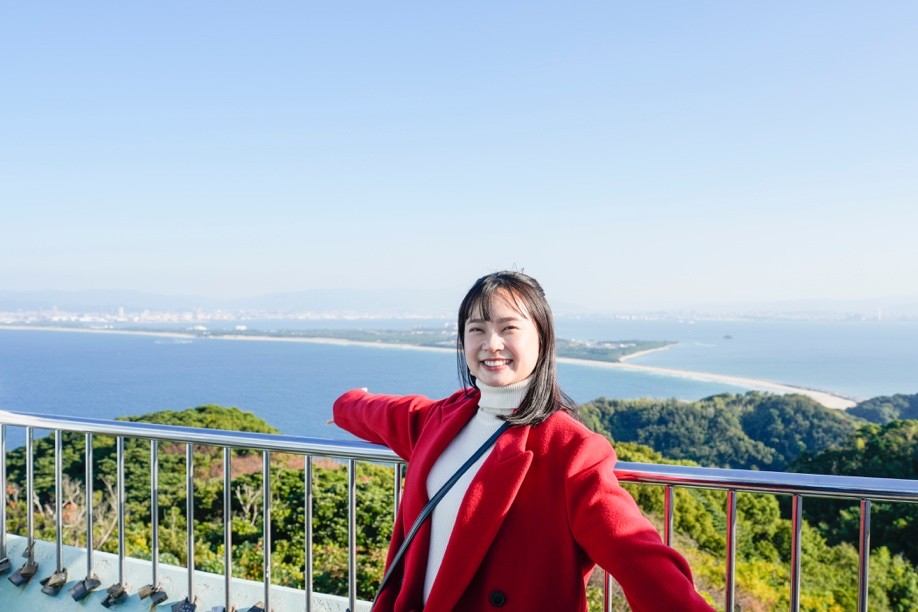
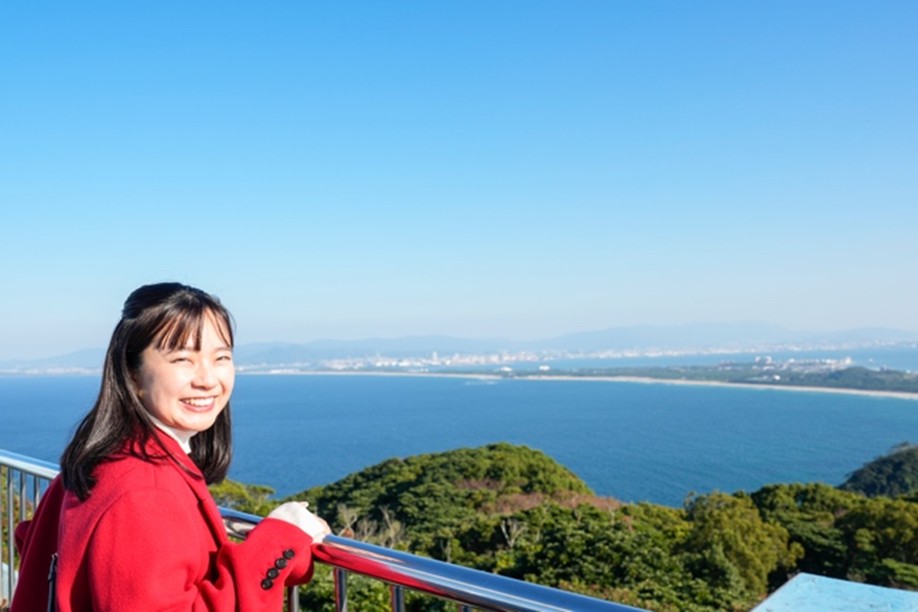
Shiomi Park sits atop the highest point of Shikanoshima. The observatory within the park offers a panoramic view of Fukuoka’s landscape—spanning the road above the sea, Nokonoshima Island, and the cityscape stretching beyond Hakata Bay!
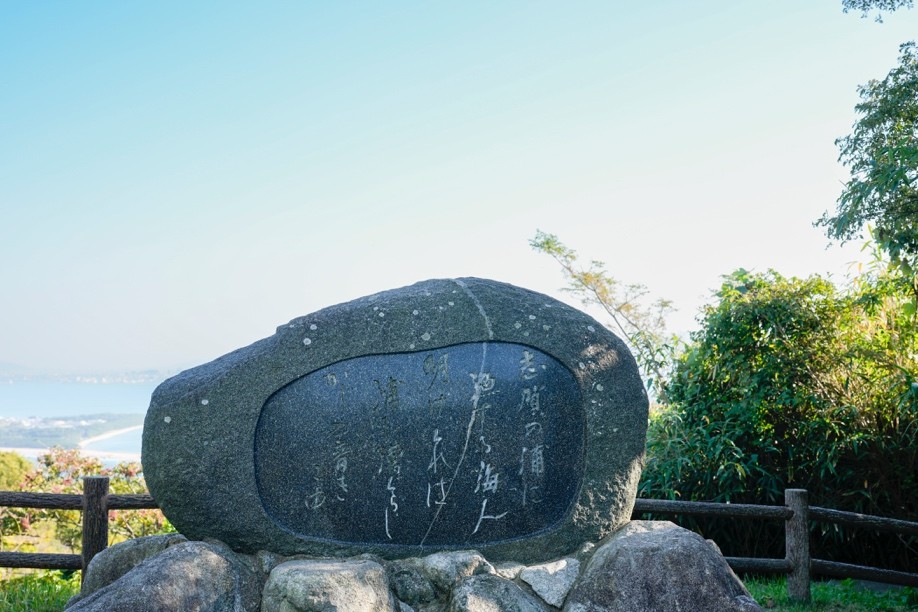
Here, a monument inscribed with a poem from the Man’yōshū anthology can be found: “At Shika Bay, the sea people go fishing at dawn; the sound of oars in the bay reaches my ears.” This poem was composed by Silla envoys staying at Tsukushi no Murotsumi (later known as Kourokan), describing how they heard the sound of the sea people rowing in Hakata Bay. The verse carries a slightly bittersweet sentiment: “The sea people seem to be hurrying home, and looking at my own circumstances, I can’t help but envy them.”
Shiomi Park Observatory
- ■Address:
-
Shiomi, Shikanoshima, Higashi Ward, Fukuoka City, Fukuoka Prefecture
- ■Access:
- About 35 minutes on foot from the Shikanoshima stop of Nishitetsu Bus
- ■Parking:
- Available (public restrooms available)
Zen Temple Where You Can Feel the Sea Breeze[Shogonji Temple]
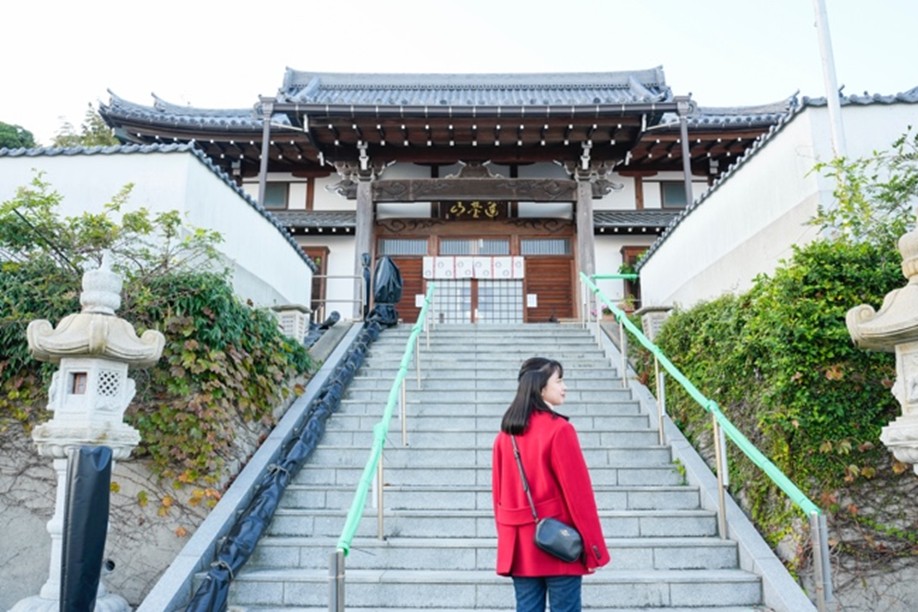
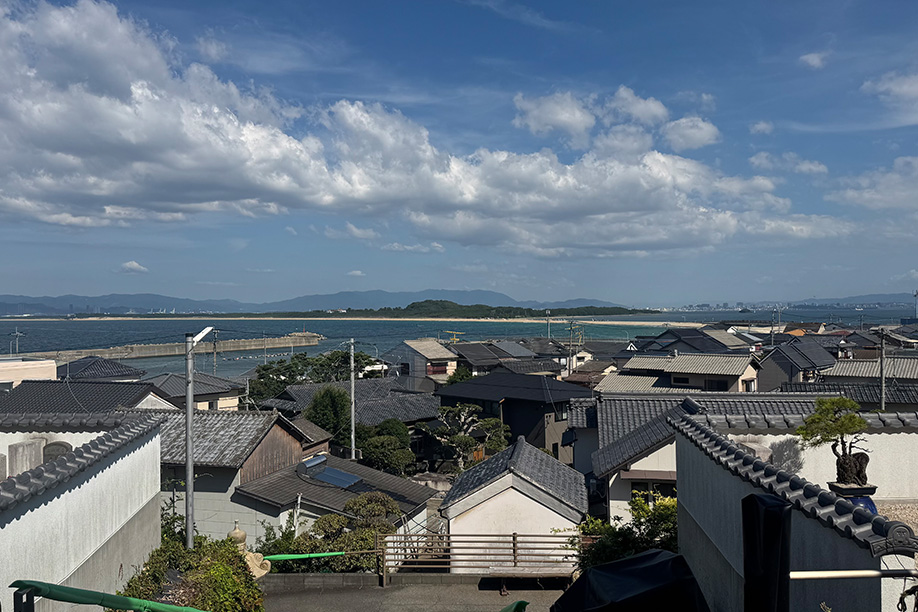
Shogonji, a Rinzai‑sect temple of the Tōfukuji school, has a history of roughly 700 years. It is said to have been founded in 1278 during Kamakura period by Shōichi Kokushi (Enni) and enshrines a statue of Enmei Jizō Bosatsu (Bodhisattva of Longevity) as its principal object of worship.
Shōichi Kokushi is also well known as the founder of Jōten-ji Temple in Hakata. According to anecdotes, when an epidemic struck Hakata, he is said to have stood on a segaki platform and sprinkled sacred nectar water throughout the town, a story sometimes cited as the origin of the Hakata Gion Yamakasa Festival.
Shikanoshima, long a key hub for maritime traffic, has welcomed many notable figures throughout history. Shōichi Kokushi was surely one of them.
Today, Shogonji Temple is widely known as a temple for matchmaking, and its cultural experiences, such as prayer bead making, zazen meditation, tea ceremonies, and sutra copying, are also popular with visitors.
Shogonji Temple
- ■Address:
-
813-1 Shikanoshima, Higashi Ward, Fukuoka City
- ■Access:
- About 6 minutes on foot from Shikanoshima Ferry Terminal or the Shikanoshima stop of Nishitetsu Bus
- ■Visiting Hours:
- 9:00 AM – 5:00 PM
- ■Parking:
- Available
- ■Official Website:
-
https://www.ne.jp/asahi/shikanoshima/syougonji/
*Advance notice is required for all experience activities.
A Harvest Festival to Enjoy the Island’s Scenery, Cuisine, and Autumn Evenings![Shiosai Yoi Festival]
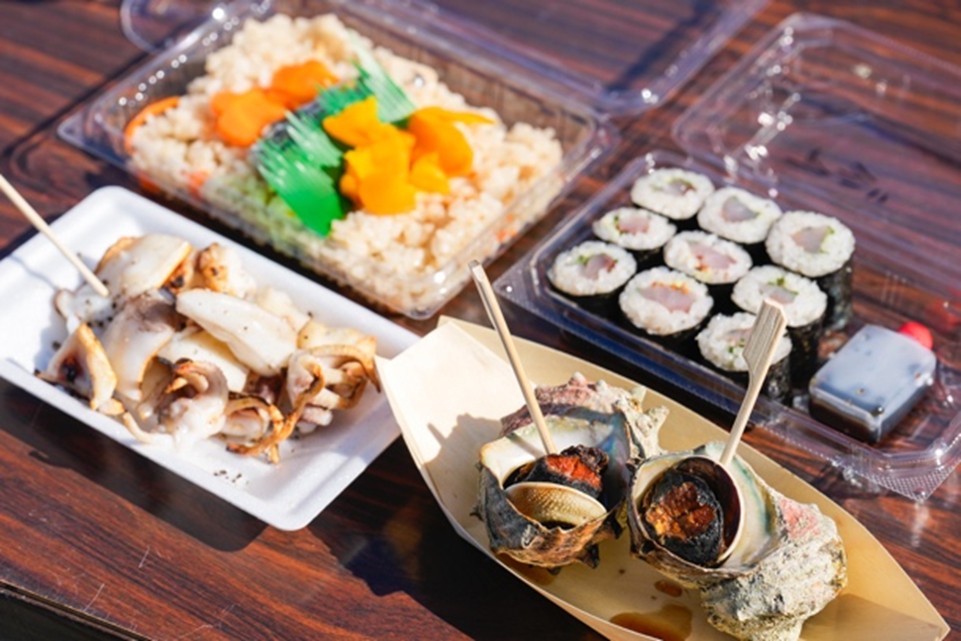
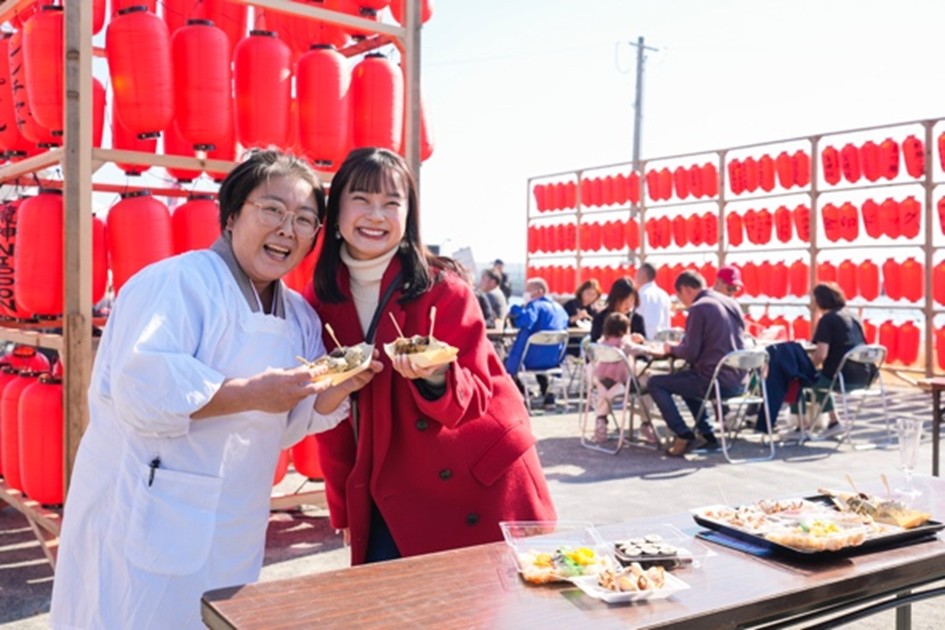
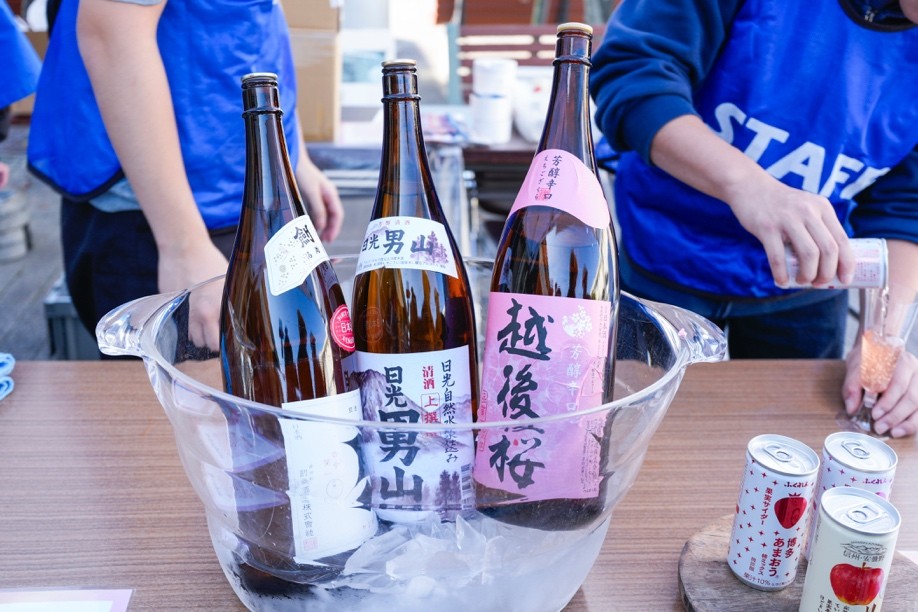
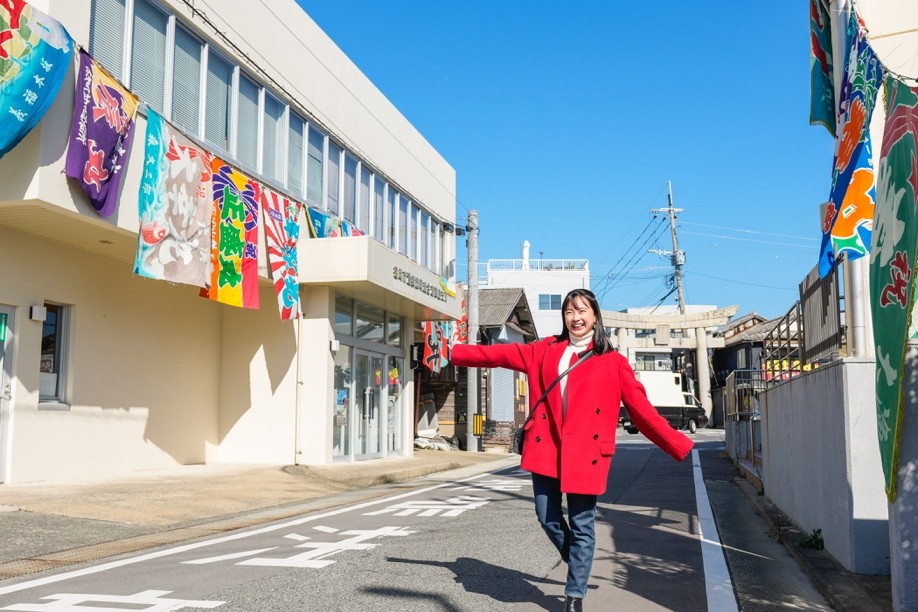
During the island tour, the Shiosai Yoi Festival happened to be taking place, and the venue was bustling with visitors from both the island and beyond. Welcome drinks included sacred sake from Shikaumi Shrine and local fruit juices. Shikanoshima gourmet dishes featuring fresh seafood such as squid and turban shells were also available, allowing Narumi to fully savor the island’s bounty.
Shikanoshima also hosts a variety of annual festivals, including the Tanabata Festival in August and the Kinin Festival in October. Be sure to check them out when you visit!
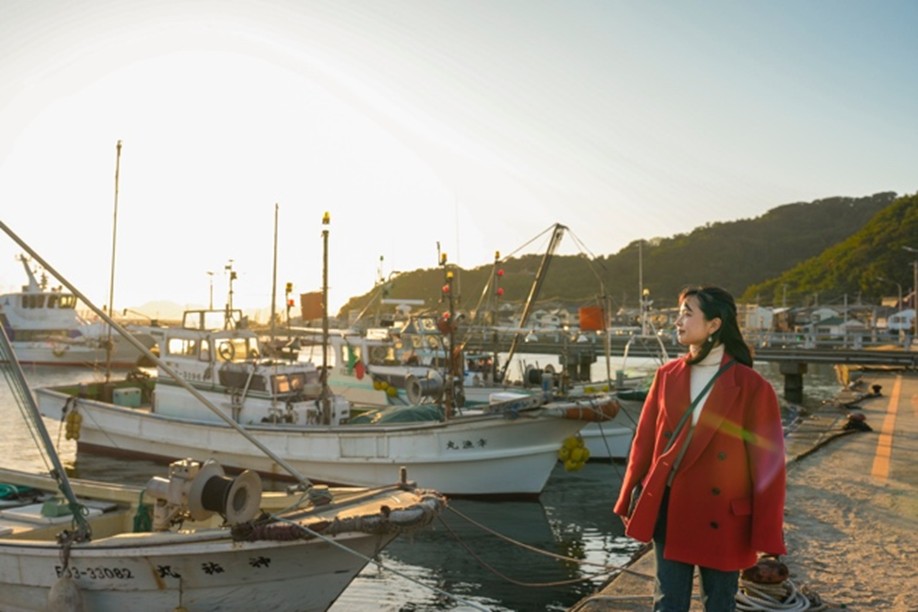
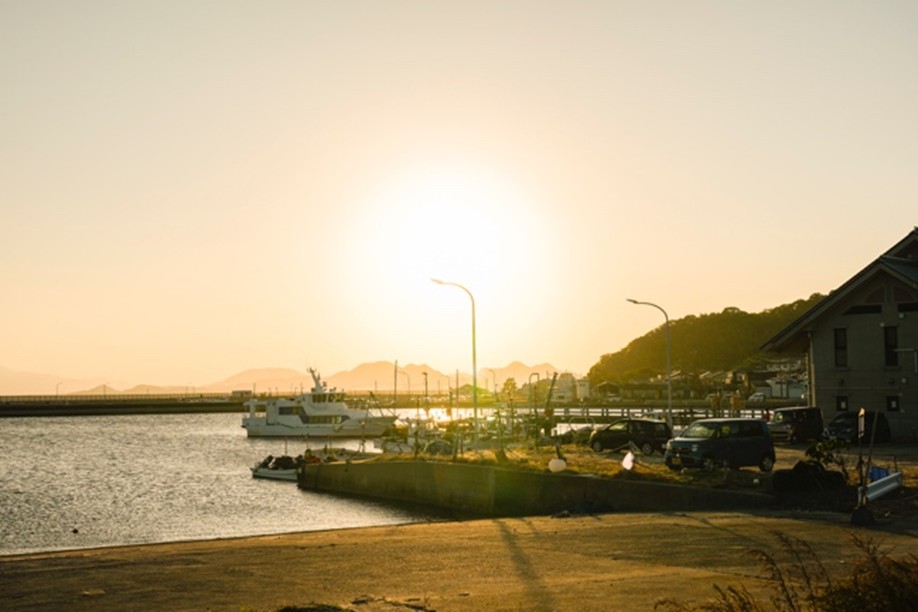
Shikanoshima is famous nationwide among history enthusiasts as the site where the Kinin Golden Block Seal was discovered, but many people still haven’t actually visited.
Do come and visit Shikanoshima, where you can enjoy nature, history, and local cuisine!
List of visited spots
- ・Fukuoka City Ferry Hakata Ferry Passenger Terminal (within Bayside Place Hakata)
- ・Fukuoka City Ferry Shikanoshima Ferry Passenger Terminal
- ・Michikiri
- ・Shikashima Cycle
- ・Shikaumi Shrine
- ・Kinin Park
- ・Mongolian Mound
- ・Okitsu-gu, Shikaumi Shrine
- ・Nakatsu-gu Kofun
- ・Shiomi Park Observatory
- ・Shogonji Temple